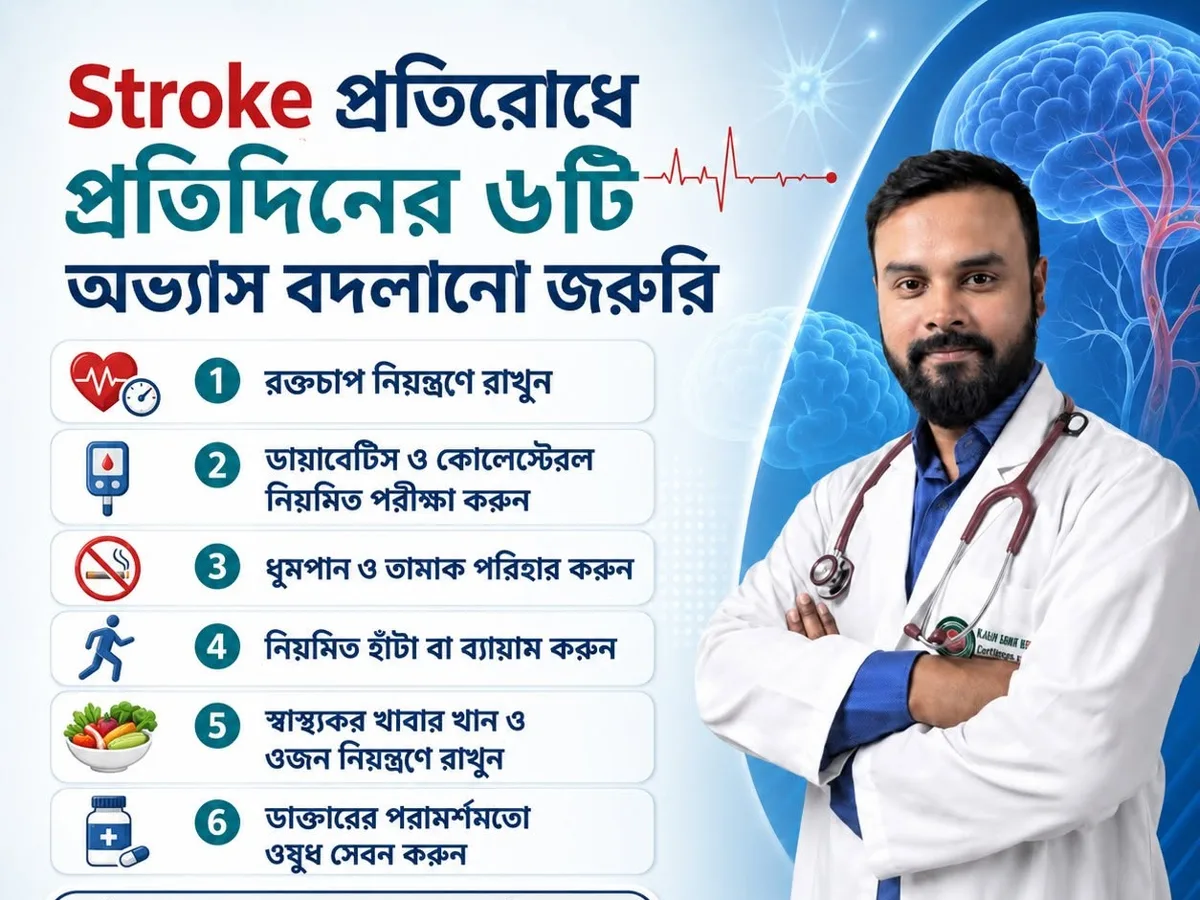
Six Daily Habits That Help Prevent Stroke
Most strokes are preventable. From blood pressure control to daily walking — six everyday habits that lower stroke risk.
Read more — Six Daily Habits That Help Prevent StrokeSudden face droop, limb weakness or slurred speech — rapid stroke recognition, treatment planning, secondary prevention and long-term follow-up.
One side of the face droops, or the smile is uneven.
Sudden weakness in an arm or leg — one arm drifts down when both are raised.
Slurred or strange speech, or trouble understanding.
Get emergency care immediately — note the time symptoms started.
A stroke happens when blood supply to part of the brain is suddenly blocked (ischaemic stroke) or a blood vessel bursts inside the brain (haemorrhagic stroke). Millions of neurons can be lost every few minutes — in stroke, time is brain.
Sudden loss of vision, loss of balance or a sudden severe headache can also be signs of stroke.
High blood pressure, diabetes, high cholesterol, smoking, heart disease (especially an irregular heartbeat such as atrial fibrillation), obesity, physical inactivity and a previous stroke or TIA.
An urgent CT or MRI scan identifies the type of stroke. Blood tests, ECG, echocardiography and imaging of the neck and brain vessels help find the cause.
For eligible patients who reach hospital in time, clot-dissolving treatment (thrombolysis) or clot removal at a specialised centre (mechanical thrombectomy) may be considered — which is why speed matters. Afterwards, risk-factor control, appropriate medicines, physiotherapy and regular follow-up help prevent a second stroke.
If stroke signs appear, do not wait for a chamber appointment — go straight to the nearest hospital emergency department or call 999.
After a stroke or TIA, regular neurology follow-up is needed for a long-term prevention plan, medicine review and rehabilitation.
This information is for general health awareness. Please consult in person for advice about your own condition.
Yes. It may be a TIA (mini-stroke), a warning sign of a major stroke. Urgent assessment is important.
Yes, the risk remains. Controlling blood pressure, diabetes and cholesterol, regular medicines and follow-up greatly reduce it.
Most strokes are preventable. From blood pressure control to daily walking — six everyday habits that lower stroke risk.
Read more — Six Daily Habits That Help Prevent Stroke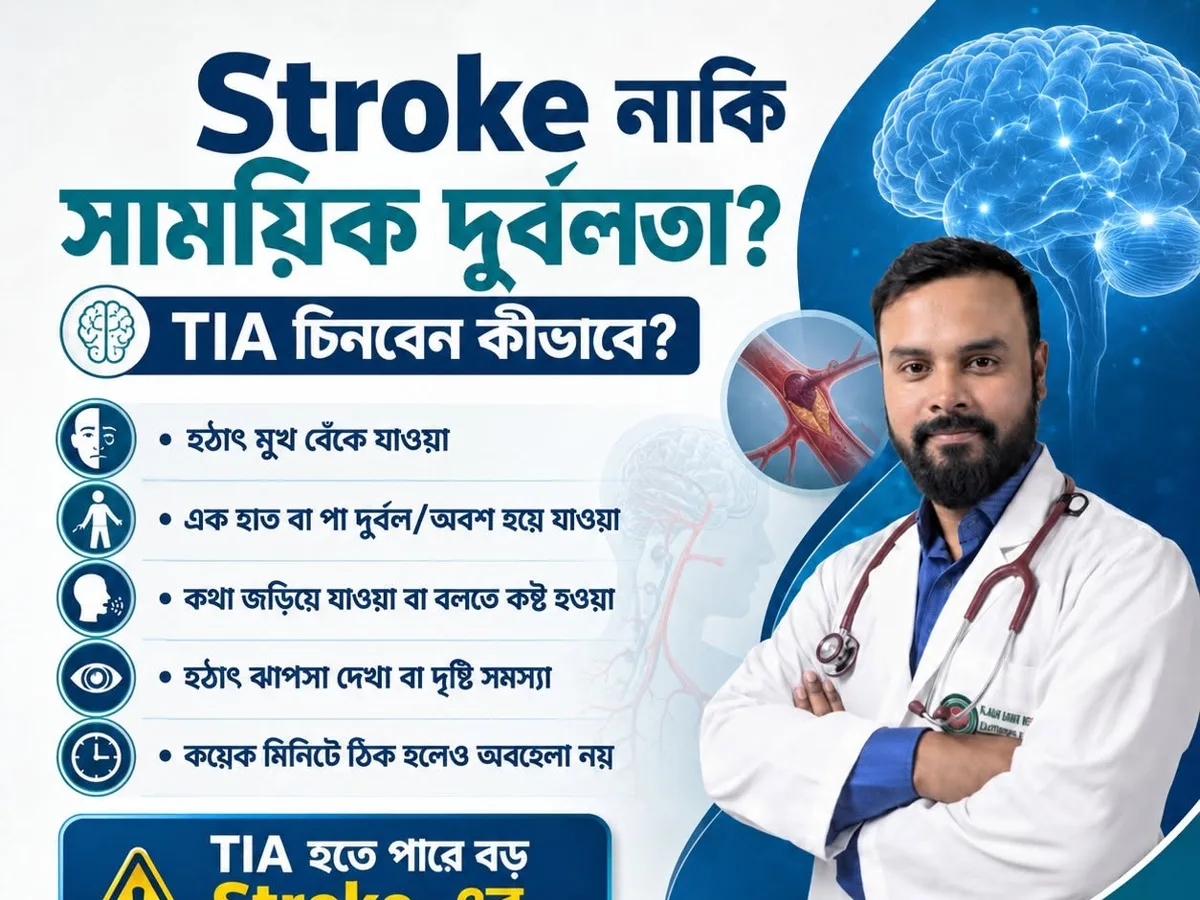
Face droop or arm weakness that settles in minutes should not be ignored — a TIA can be the early warning of a major stroke.
Read more — Stroke or a Passing Weakness? How to Recognise a TIA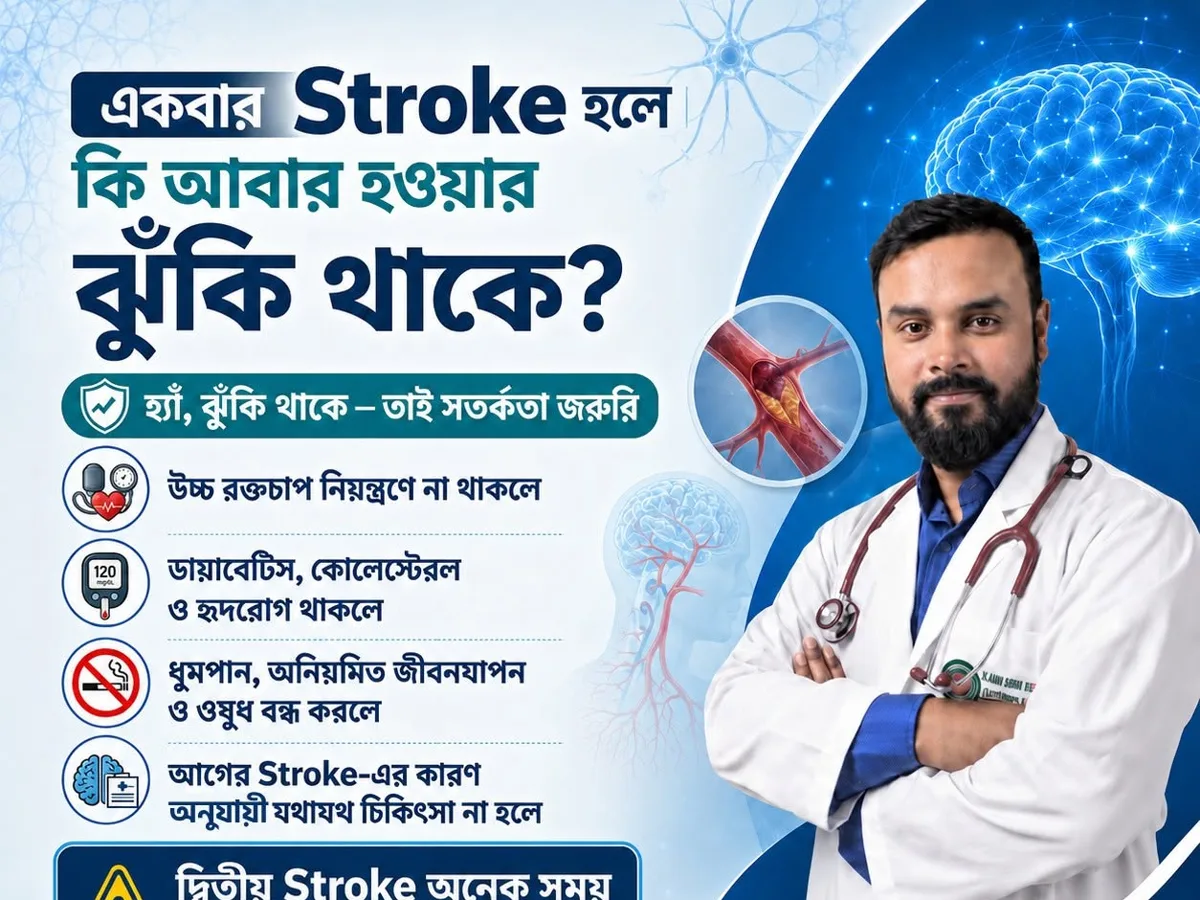
Yes — and a second stroke can be more severe. What raises the risk and how to lower it.
Read more — After One Stroke, Is There a Risk of Another?Serial by phone or WhatsApp — one number for both chambers — 01822-673173
Call or WhatsApp for a serial at the Dhaka (Mirpur) and Chattogram (Panchlaish) chambers.