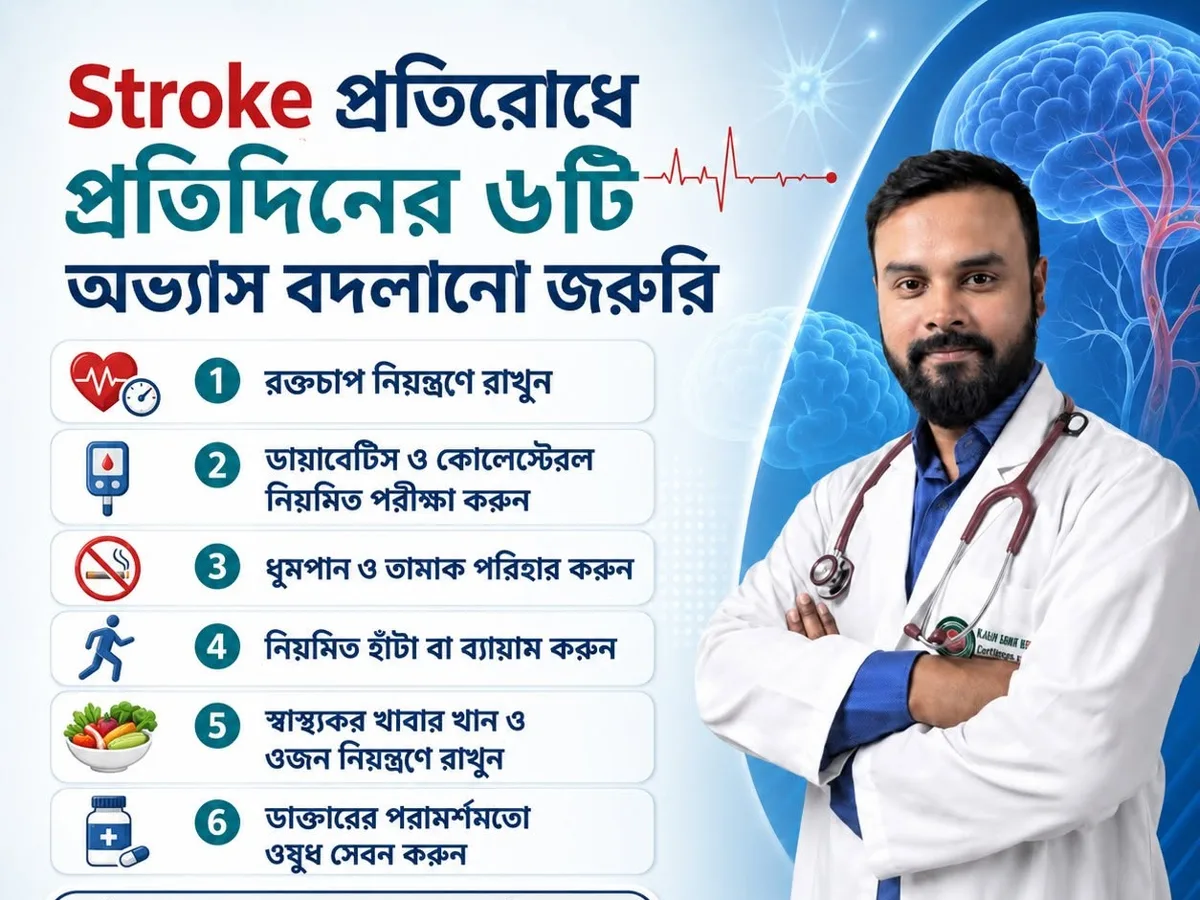
A stroke strikes suddenly, but the risk builds over years. Research shows that most strokes are linked to risk factors that can be controlled. Healthy habits are a powerful way to prevent stroke.
1. Keep blood pressure under control
High blood pressure is the biggest risk factor for stroke. Check it regularly, and if you are on medicine, do not stop it on your own even when readings are good.
2. Check diabetes and cholesterol regularly
High sugar and fats narrow and stiffen blood vessels. Have regular tests and treatment as advised.
3. Avoid smoking and all tobacco
Cigarettes, chewing tobacco and other tobacco products damage blood vessels. Risk starts falling as soon as you quit.
4. Walk or exercise regularly
At least 30 minutes of brisk walking on most days helps control blood pressure, weight and blood sugar.
5. Eat healthily and manage your weight
Less salt, more vegetables and fruit, fewer fried and processed foods — good for both heart and brain.
6. Take medicines as prescribed
After a stroke, TIA or heart disease, preventive medicines must be taken regularly. Talk to your doctor before stopping any medicine.
Remember: if the face droops, an arm or leg is weak or speech is slurred, go to an emergency department without delay — time is brain.
Frequently asked questions
Can stroke be prevented?
In most cases the risk can be greatly reduced by controlling blood pressure, diabetes and cholesterol and by quitting smoking.
Information on this website is for health awareness only and is not a substitute for a consultation. If stroke signs appear (face drooping, arm or leg weakness, slurred speech), do not wait for an appointment — go to the nearest hospital emergency department immediately.

Clinical, Interventional & Stroke Neurologist · Assistant Professor, Neurosciences Hospital, Dhaka
AboutRelated articles
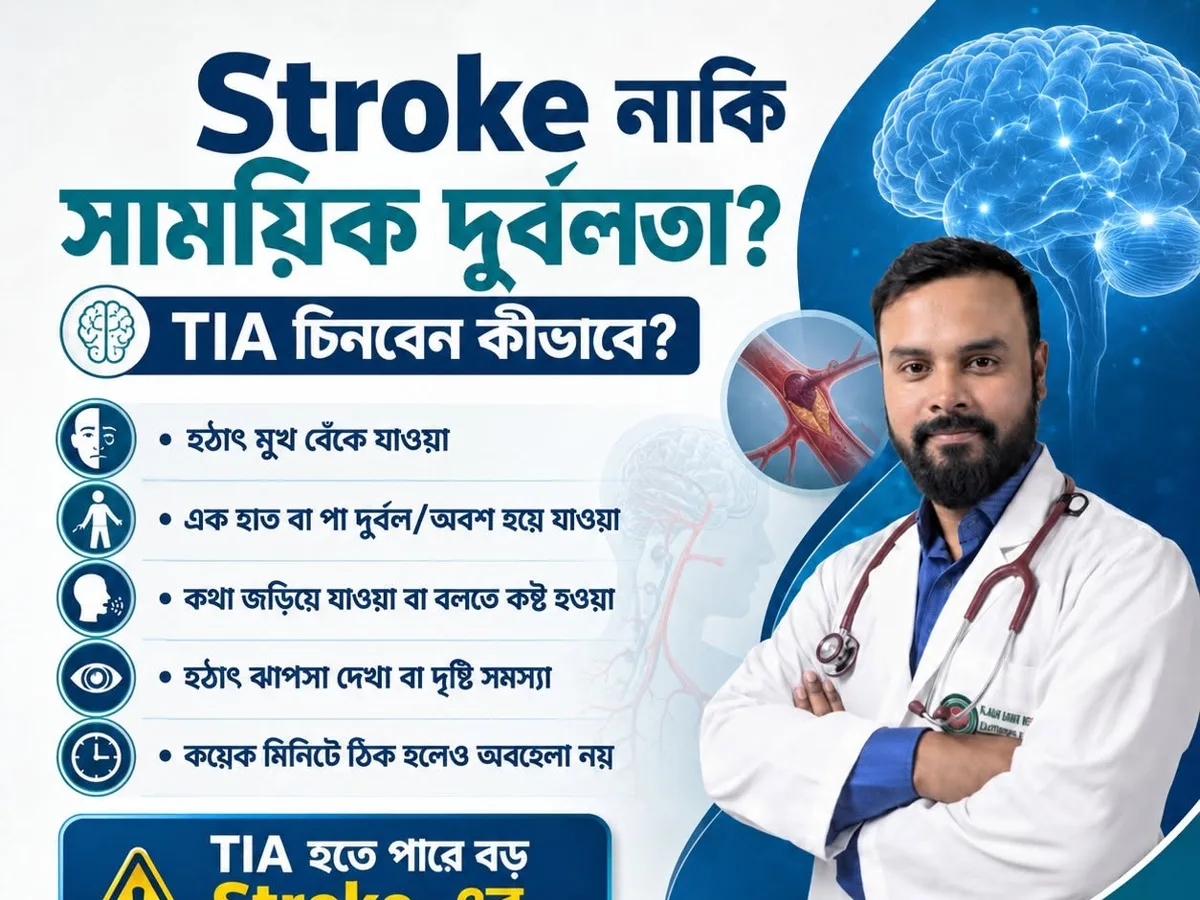
Stroke or a Passing Weakness? How to Recognise a TIA
Face droop or arm weakness that settles in minutes should not be ignored — a TIA can be the early warning of a major stroke.
Read more — Stroke or a Passing Weakness? How to Recognise a TIA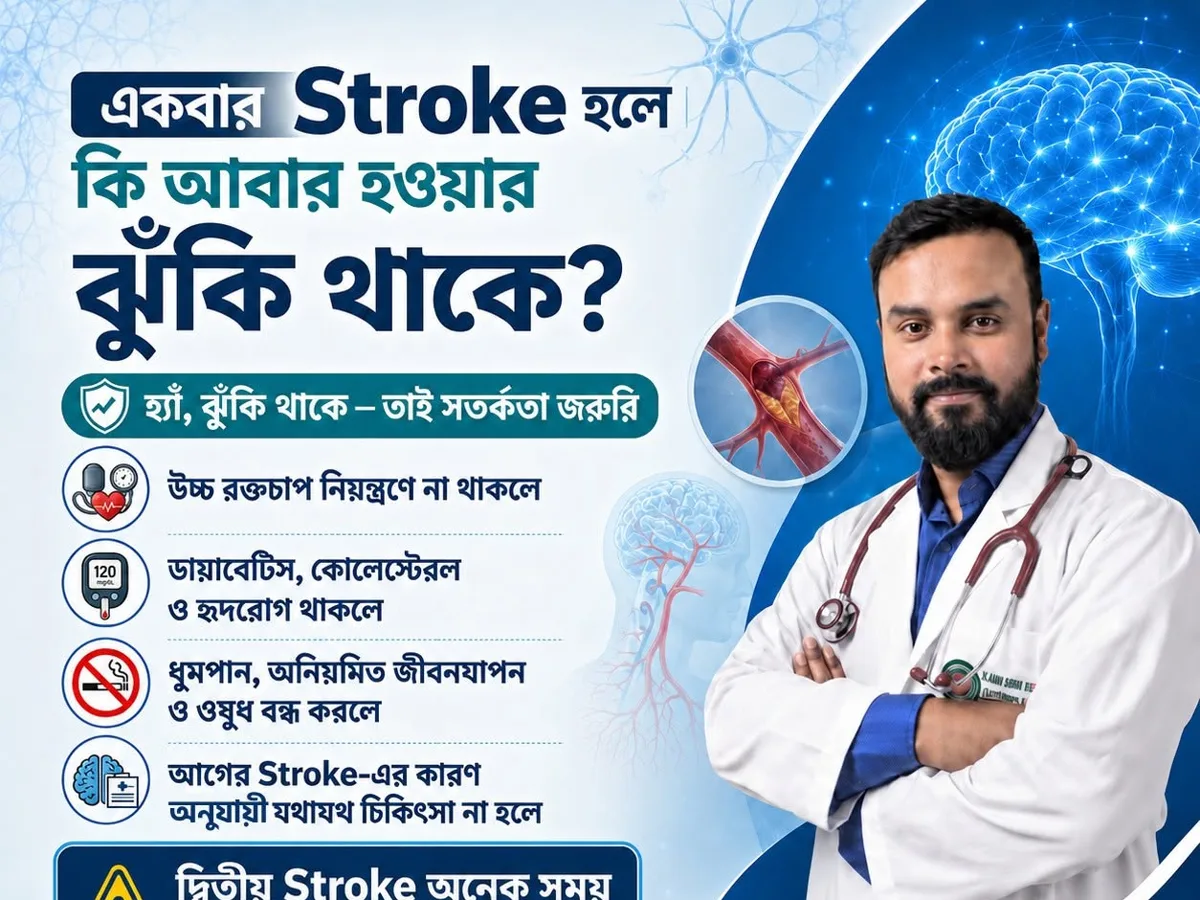
After One Stroke, Is There a Risk of Another?
Yes — and a second stroke can be more severe. What raises the risk and how to lower it.
Read more — After One Stroke, Is There a Risk of Another?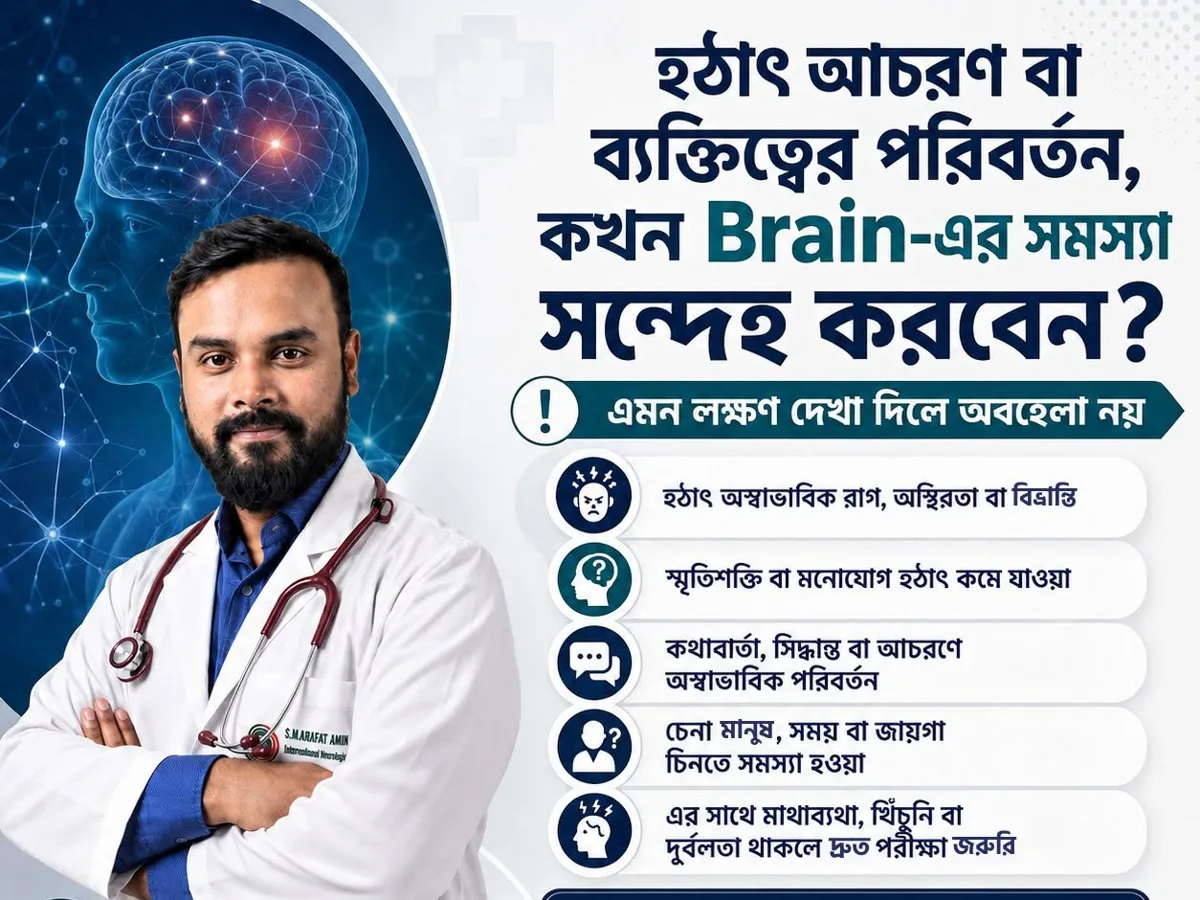
Sudden Change in Behaviour or Personality — When to Suspect a Brain Problem
Unusual anger, falling memory, difficulty recognising familiar people — sometimes signs of brain tumour, stroke or dementia.
Read more — Sudden Change in Behaviour or Personality — When to Suspect a Brain Problem