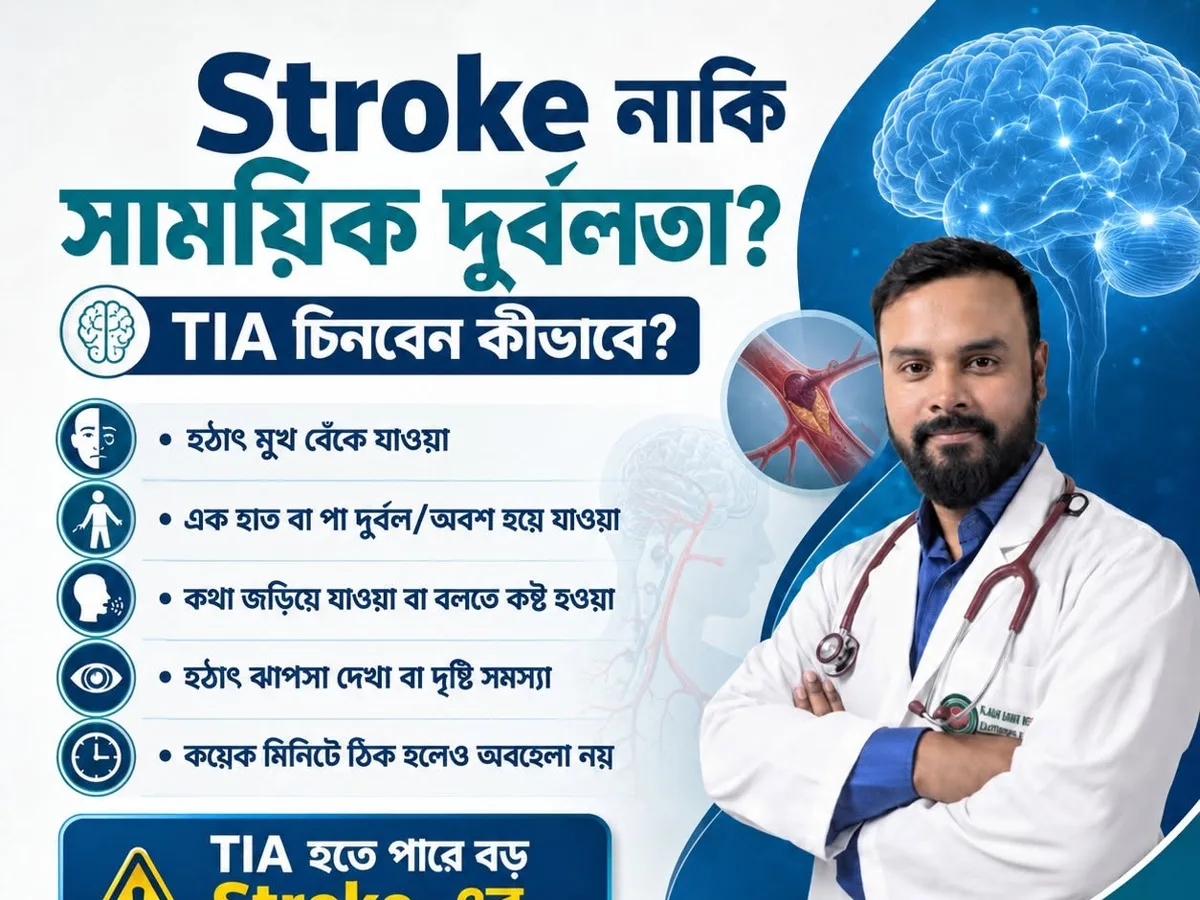
A TIA (transient ischaemic attack) or "mini-stroke" is a temporary interruption of blood flow to the brain. The signs are the same as a stroke but disappear within minutes to hours — so many people dismiss it as "just weakness".
Signs of TIA
- Sudden facial droop
- Weakness or numbness of one arm or leg
- Slurred speech or difficulty speaking
- Sudden blurred vision or loss of sight
- Even if it settles in minutes — do not ignore it
Why a TIA matters
A TIA can be the early warning of a major stroke. Stroke risk is highest in the first days and weeks after a TIA, and prompt assessment and treatment reduce it substantially.
What to do
Go to hospital promptly even if the symptoms have gone. Brain imaging, vessel and heart tests and blood tests are usually done to find the cause, and preventive treatment is started.
Frequently asked questions
What is the difference between a TIA and a stroke?
In a TIA the symptoms pass quickly, usually without lasting damage; a stroke can cause permanent brain injury. At the start you cannot tell them apart — both are emergencies.
Information on this website is for health awareness only and is not a substitute for a consultation. If stroke signs appear (face drooping, arm or leg weakness, slurred speech), do not wait for an appointment — go to the nearest hospital emergency department immediately.

Clinical, Interventional & Stroke Neurologist · Assistant Professor, Neurosciences Hospital, Dhaka
AboutRelated articles
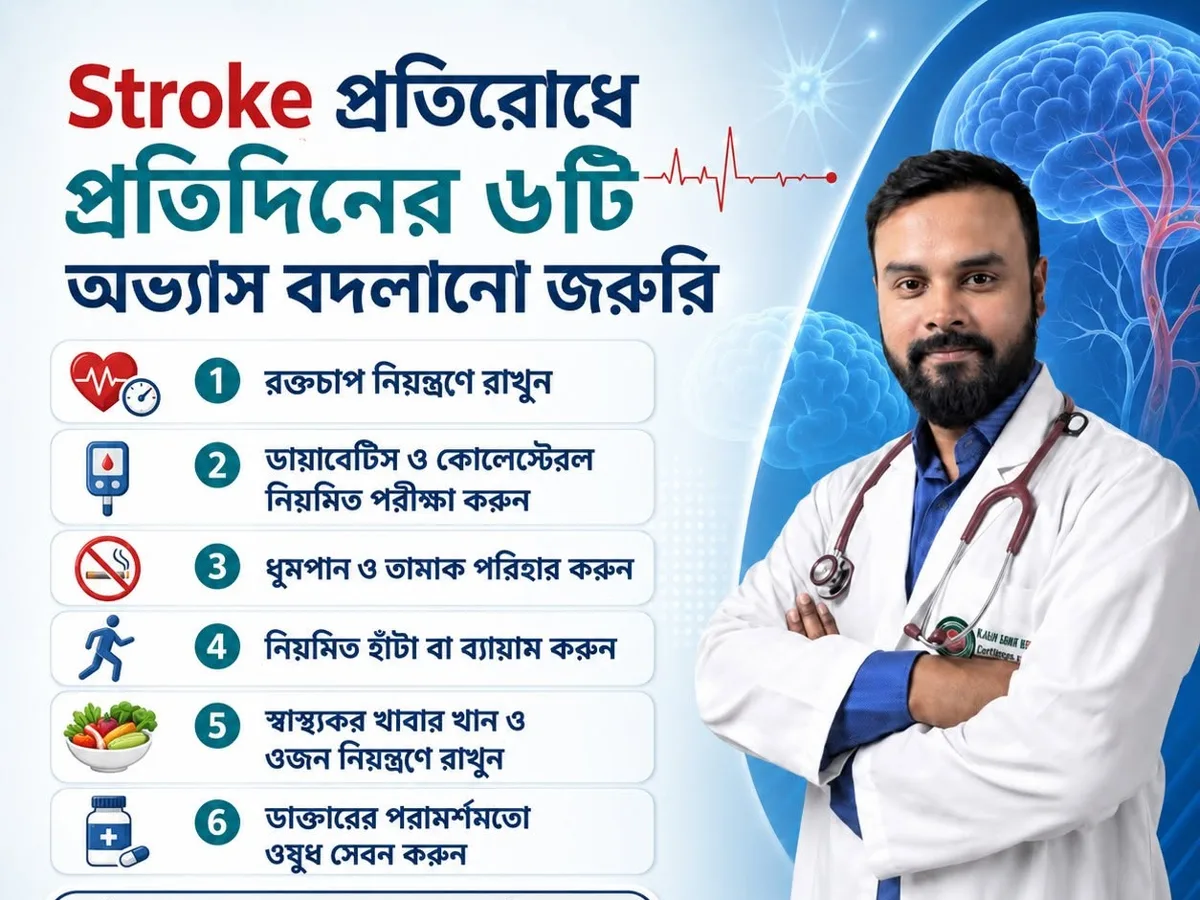
Six Daily Habits That Help Prevent Stroke
Most strokes are preventable. From blood pressure control to daily walking — six everyday habits that lower stroke risk.
Read more — Six Daily Habits That Help Prevent Stroke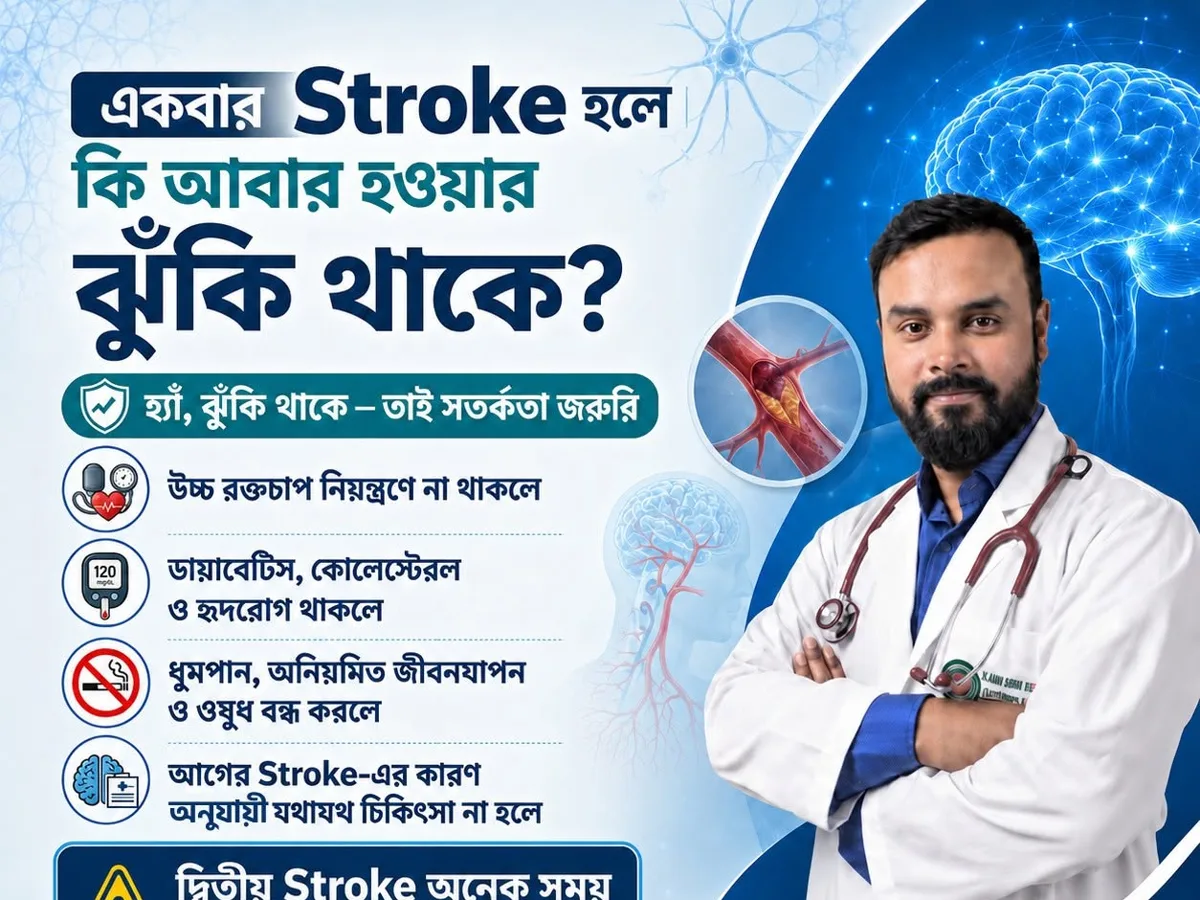
After One Stroke, Is There a Risk of Another?
Yes — and a second stroke can be more severe. What raises the risk and how to lower it.
Read more — After One Stroke, Is There a Risk of Another?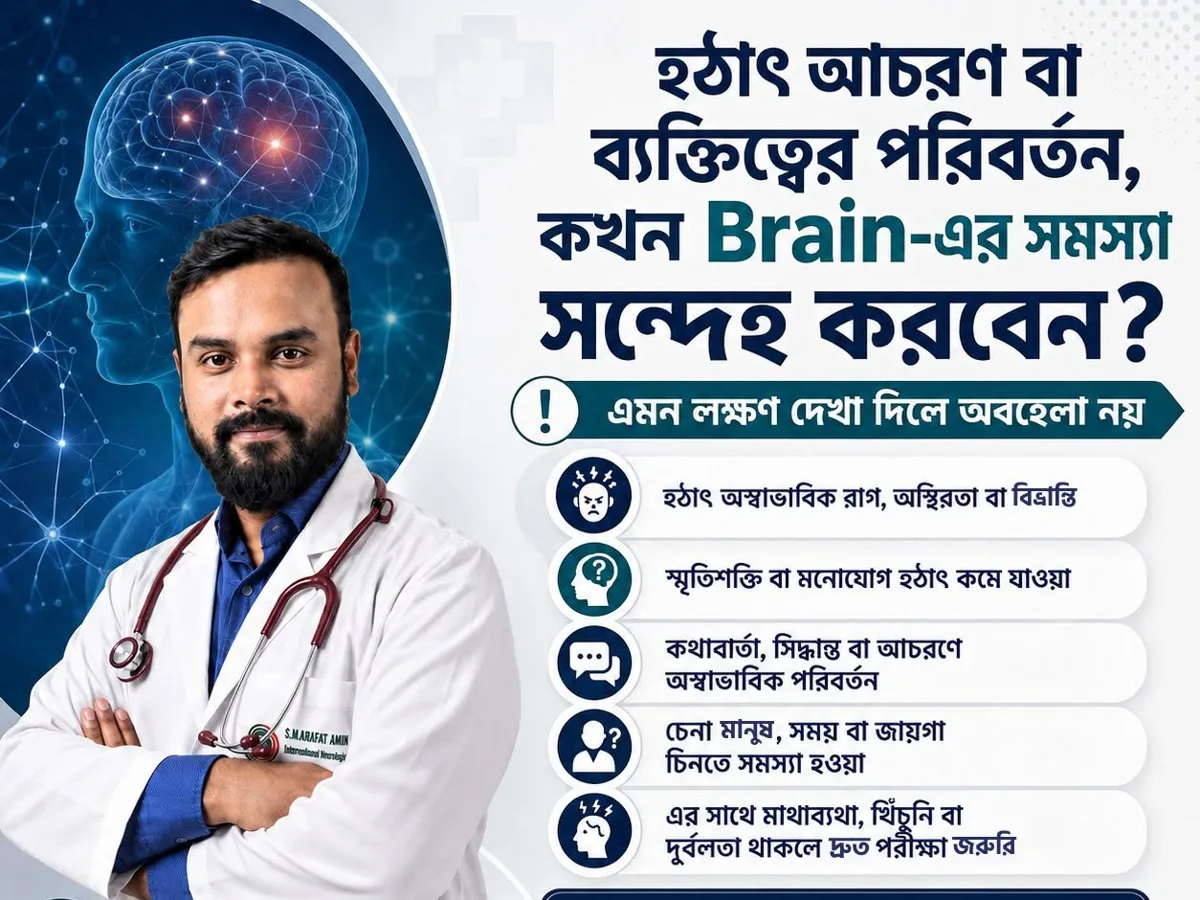
Sudden Change in Behaviour or Personality — When to Suspect a Brain Problem
Unusual anger, falling memory, difficulty recognising familiar people — sometimes signs of brain tumour, stroke or dementia.
Read more — Sudden Change in Behaviour or Personality — When to Suspect a Brain Problem