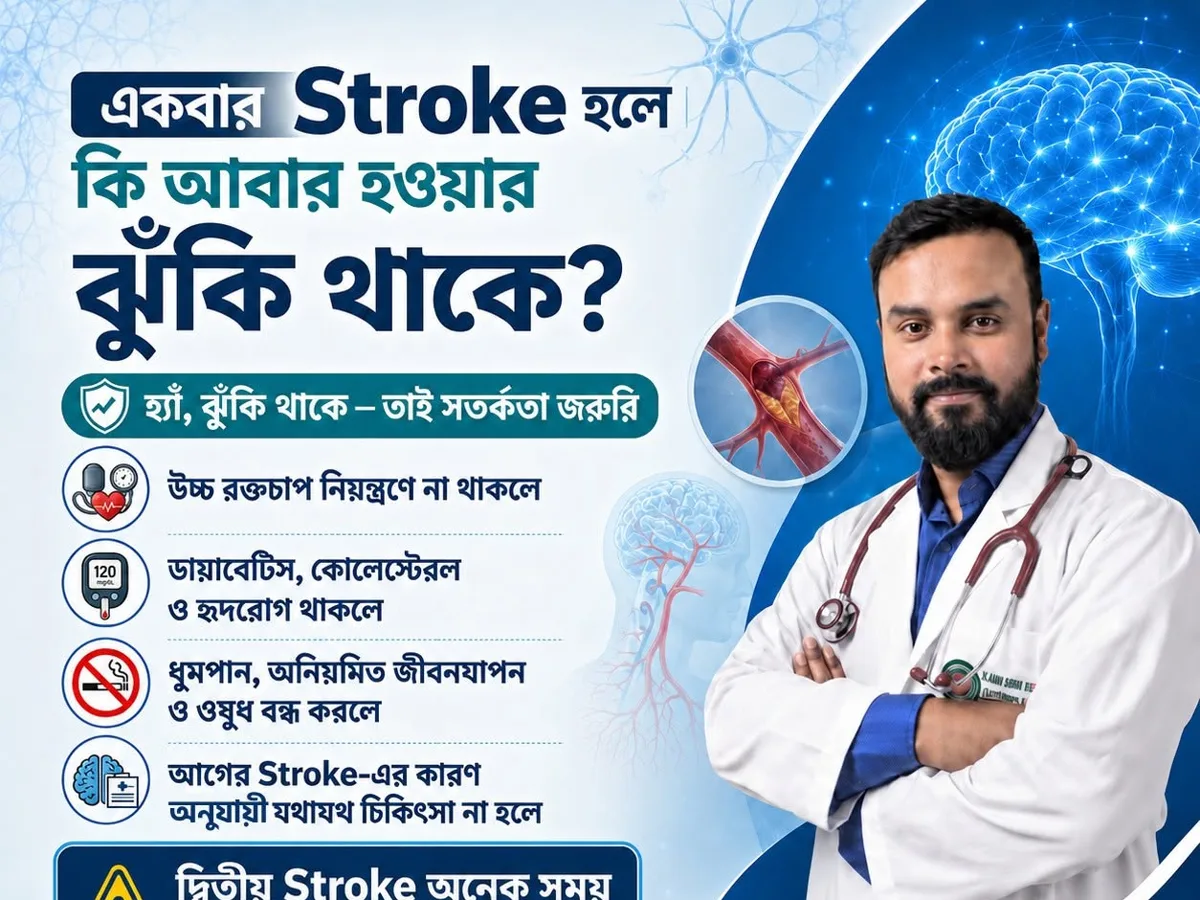
Yes — after one stroke there is a risk of another, so vigilance matters. A second stroke can often be more severe.
What raises the risk
- Uncontrolled high blood pressure
- Diabetes, high cholesterol and heart disease
- Smoking, an irregular lifestyle and stopping medicines
- Not treating the specific cause of the first stroke
Preventing a second stroke
Regular follow-up, taking medicines and controlling risk factors are essential. Treatment depends on the type and cause — prevention after a stroke caused by an irregular heartbeat is different from a stroke caused by narrowed arteries.
Physiotherapy and rehabilitation help not only to overcome weakness but to return to an active life.
Information on this website is for health awareness only and is not a substitute for a consultation. If stroke signs appear (face drooping, arm or leg weakness, slurred speech), do not wait for an appointment — go to the nearest hospital emergency department immediately.

Clinical, Interventional & Stroke Neurologist · Assistant Professor, Neurosciences Hospital, Dhaka
AboutRelated articles
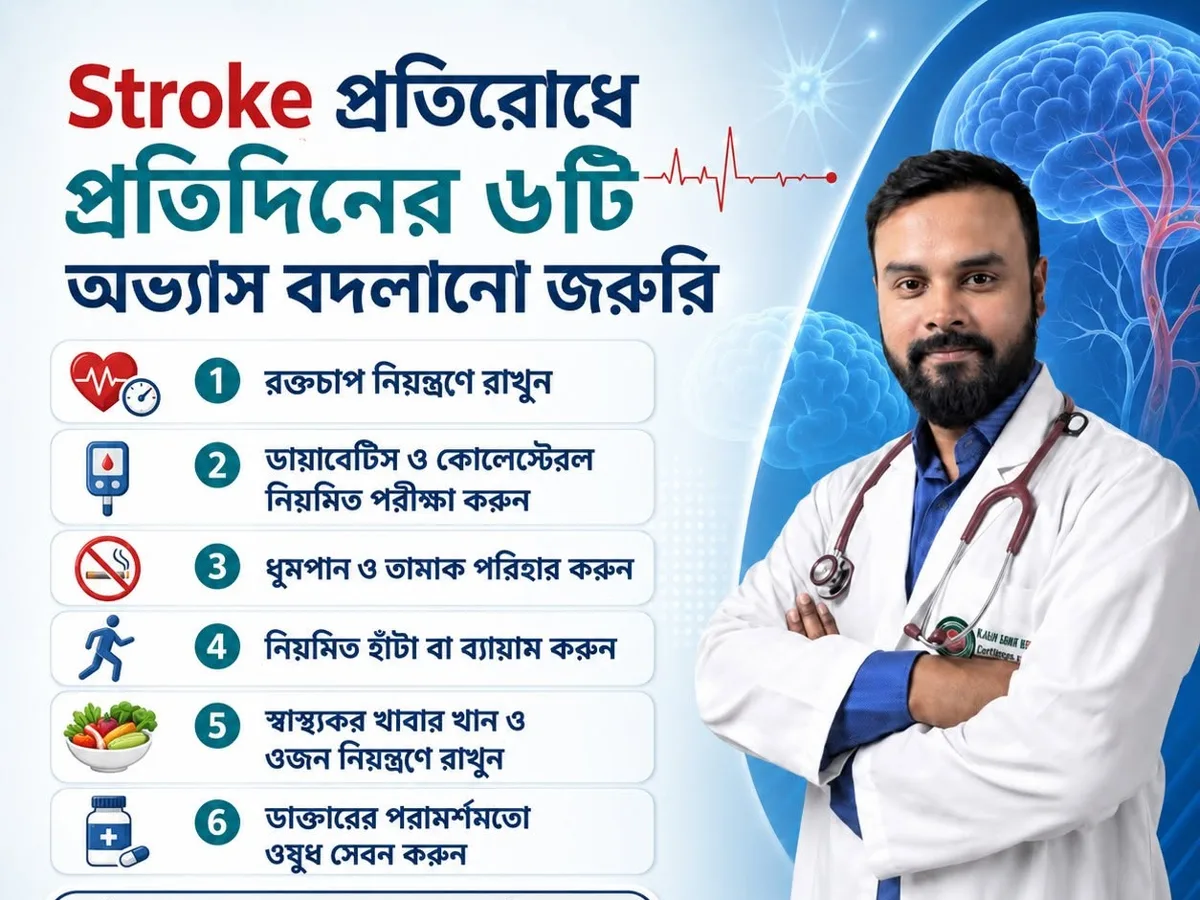
Six Daily Habits That Help Prevent Stroke
Most strokes are preventable. From blood pressure control to daily walking — six everyday habits that lower stroke risk.
Read more — Six Daily Habits That Help Prevent Stroke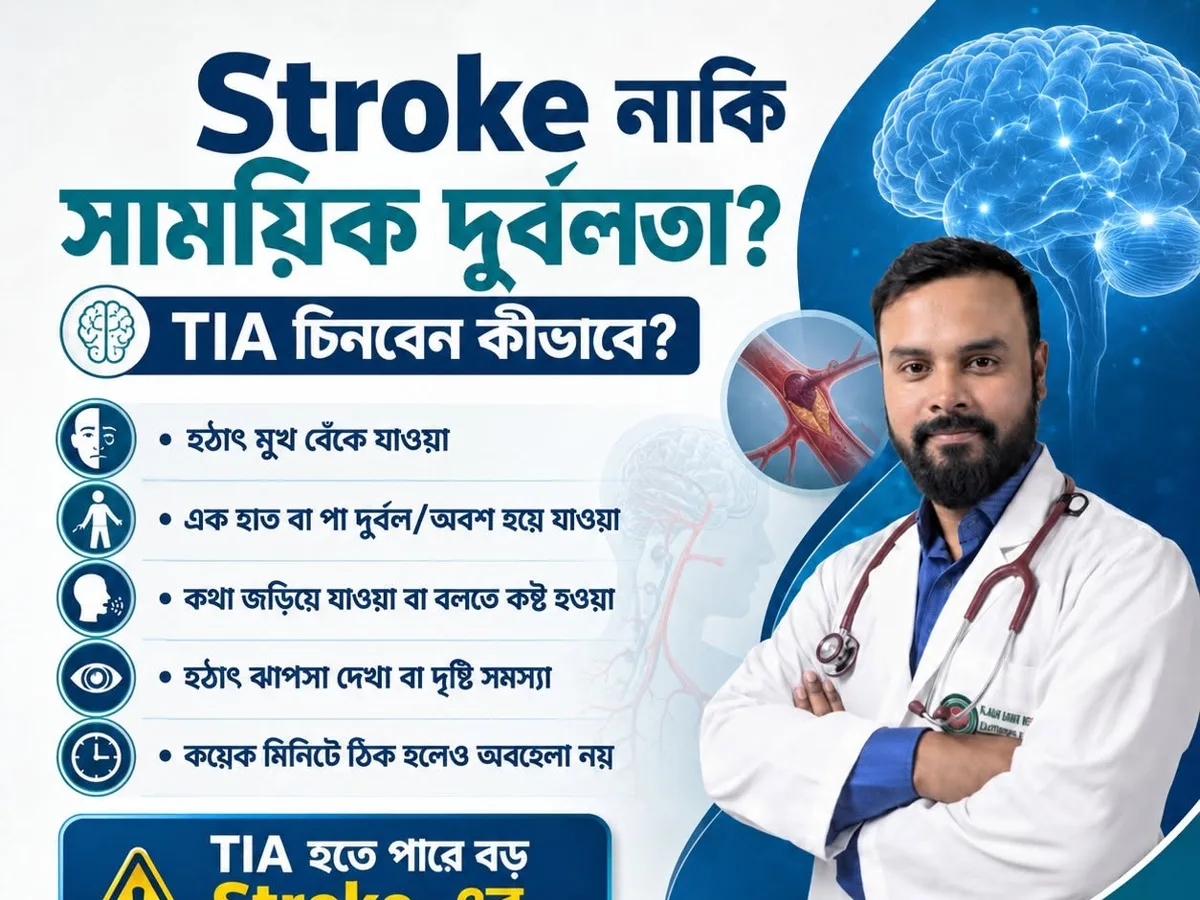
Stroke or a Passing Weakness? How to Recognise a TIA
Face droop or arm weakness that settles in minutes should not be ignored — a TIA can be the early warning of a major stroke.
Read more — Stroke or a Passing Weakness? How to Recognise a TIA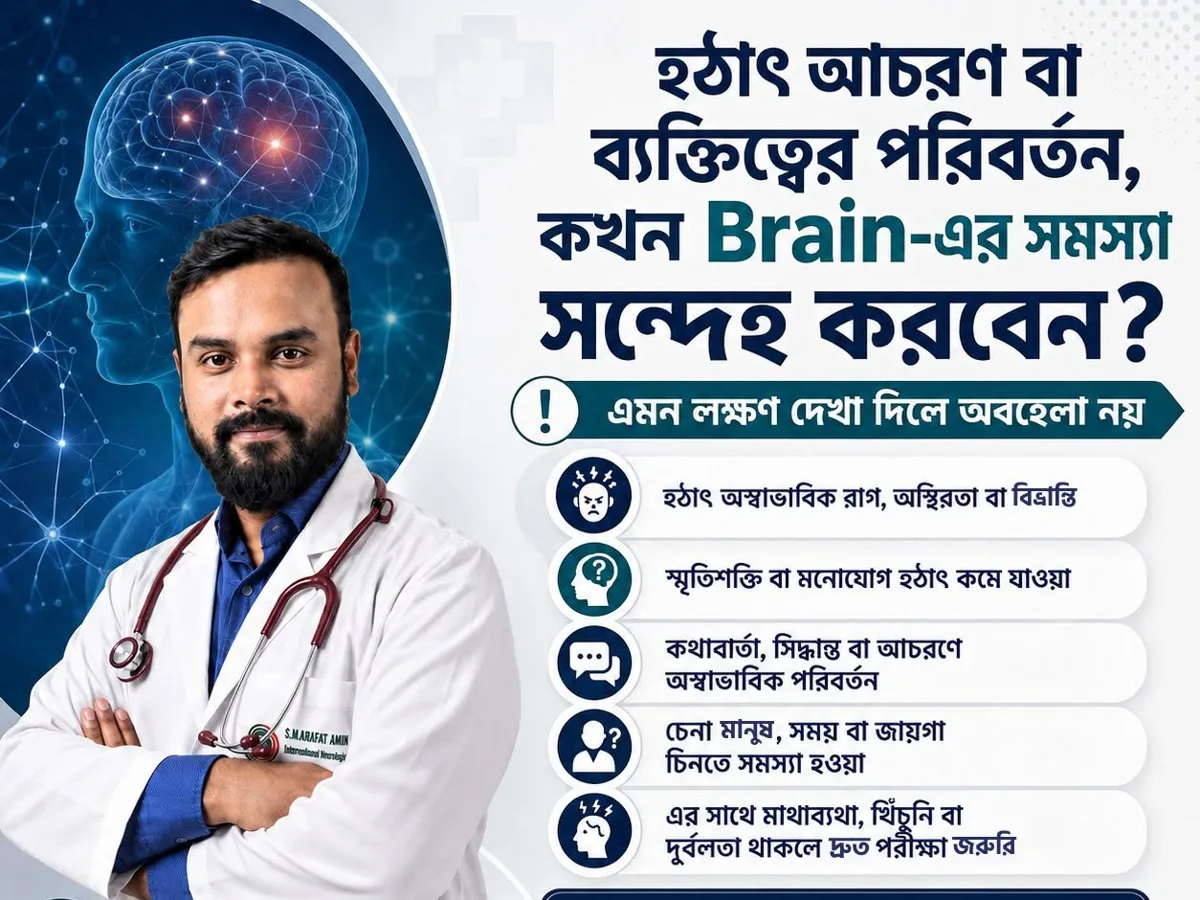
Sudden Change in Behaviour or Personality — When to Suspect a Brain Problem
Unusual anger, falling memory, difficulty recognising familiar people — sometimes signs of brain tumour, stroke or dementia.
Read more — Sudden Change in Behaviour or Personality — When to Suspect a Brain Problem