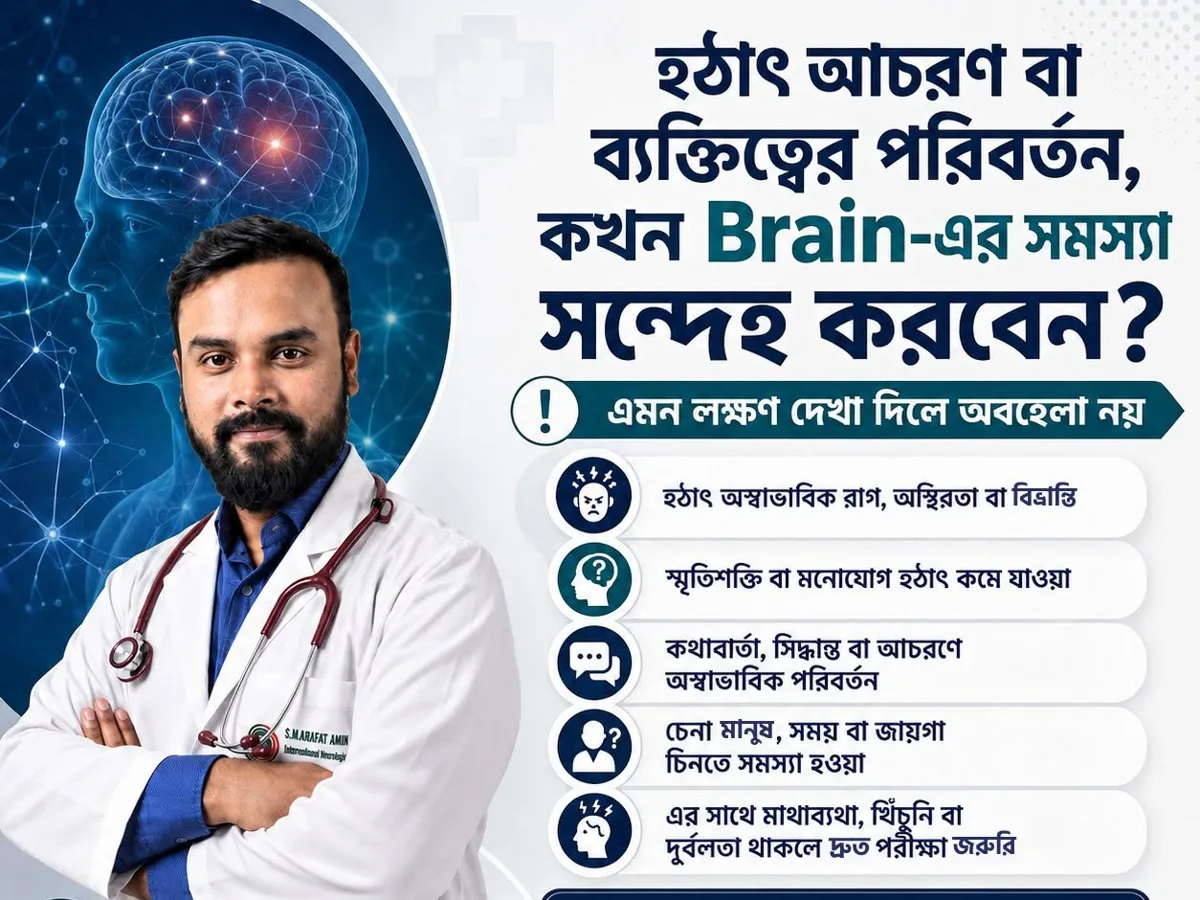
When a loved one's behaviour changes suddenly, we often blame stress or age. In some cases, though, it is a sign of brain disease.
Do not ignore these signs
- Sudden unusual anger, restlessness or confusion
- A sudden fall in memory or concentration
- Unusual changes in speech, decisions or behaviour
- Difficulty recognising familiar people, time or places
- With headache, seizures or weakness, urgent tests are needed
Possible causes
These can sometimes be signs of a brain tumour, stroke, dementia or other neurological problems — or of brain infection, salt imbalance, thyroid disease or medicine side effects, many of which are treatable.
What to do
See a neurologist for prompt assessment. Bringing a family member who has noticed the changes makes diagnosis easier.
Information on this website is for health awareness only and is not a substitute for a consultation. If stroke signs appear (face drooping, arm or leg weakness, slurred speech), do not wait for an appointment — go to the nearest hospital emergency department immediately.

Clinical, Interventional & Stroke Neurologist · Assistant Professor, Neurosciences Hospital, Dhaka
AboutRelated articles
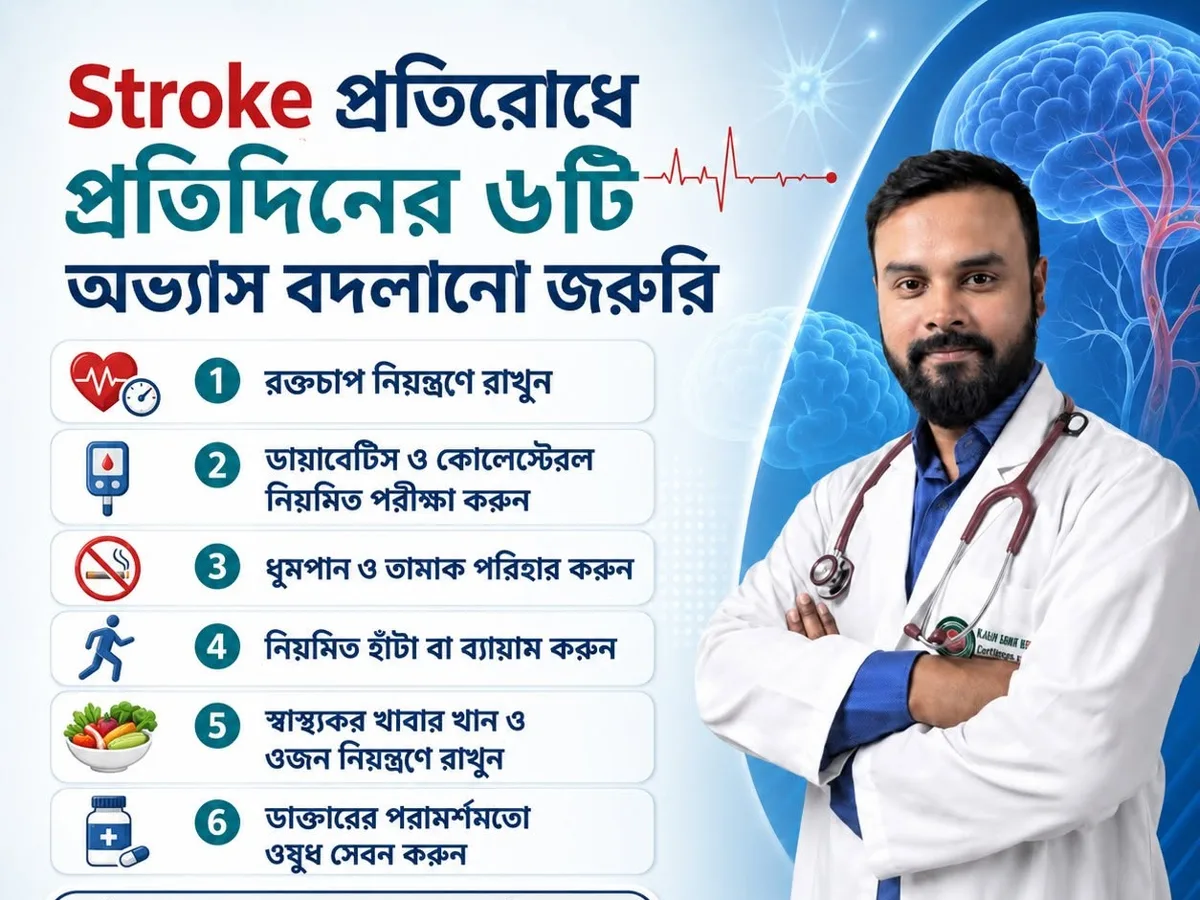
Six Daily Habits That Help Prevent Stroke
Most strokes are preventable. From blood pressure control to daily walking — six everyday habits that lower stroke risk.
Read more — Six Daily Habits That Help Prevent Stroke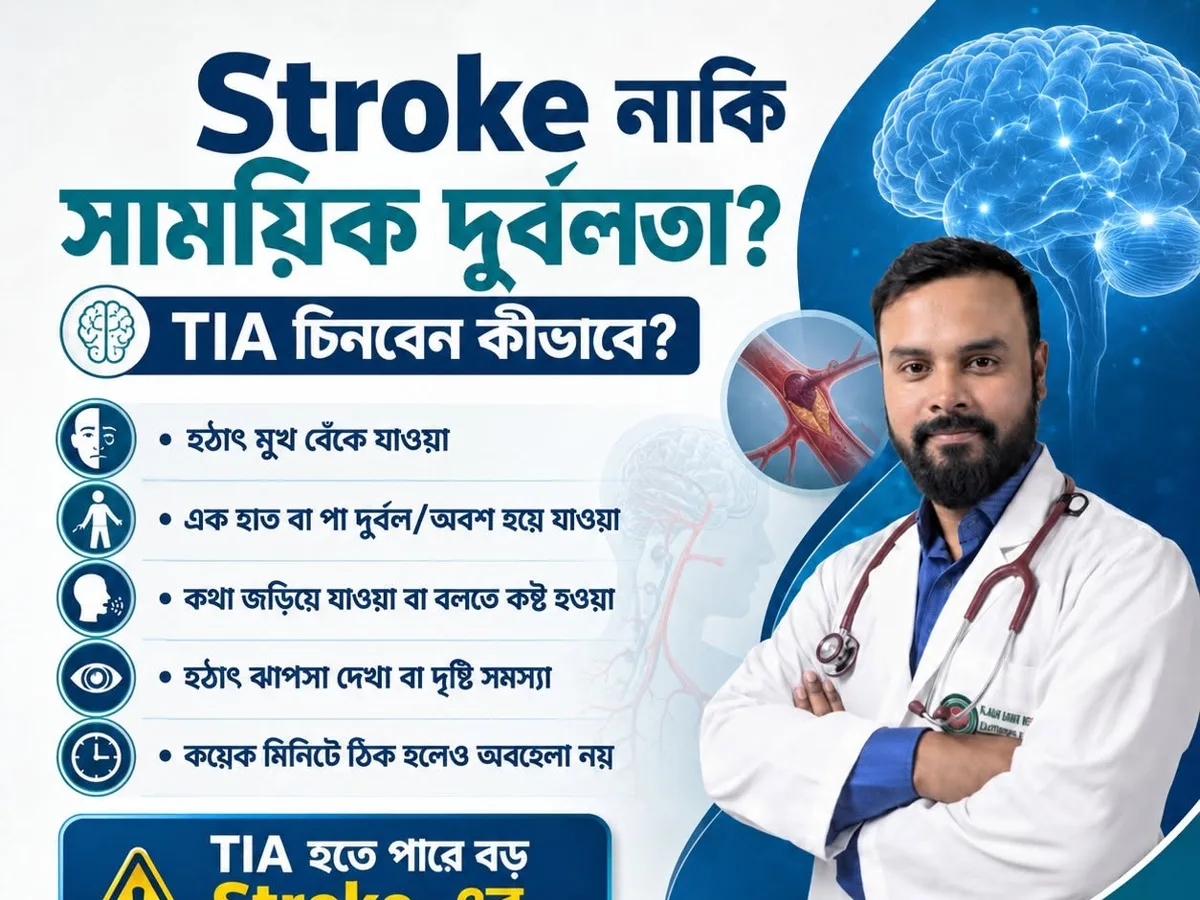
Stroke or a Passing Weakness? How to Recognise a TIA
Face droop or arm weakness that settles in minutes should not be ignored — a TIA can be the early warning of a major stroke.
Read more — Stroke or a Passing Weakness? How to Recognise a TIA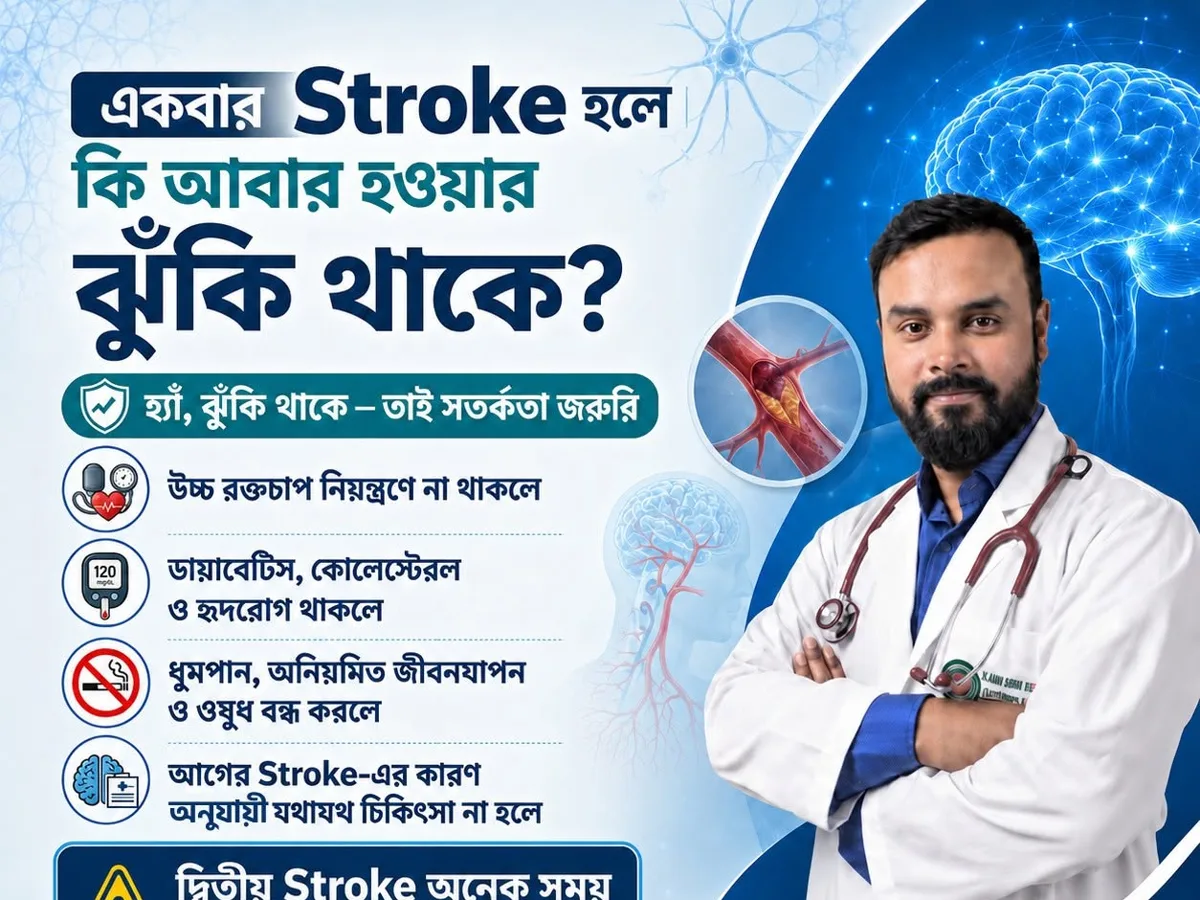
After One Stroke, Is There a Risk of Another?
Yes — and a second stroke can be more severe. What raises the risk and how to lower it.
Read more — After One Stroke, Is There a Risk of Another?