
Migraine is not just an ordinary headache — it is a neurological condition with intense throbbing pain, nausea and sensitivity to light and sound.
What to do right away
- Rest in a quiet, dark place
- Drink enough water
- Take medicine as advised by your doctor, early in the attack
- Avoid screens
Preventing migraine
Regular sleep, not skipping meals, enough water, less stress and avoiding personal triggers (sunlight, some foods, lack of sleep) all help. If attacks happen several times a month, see a neurologist about preventive treatment.
Acting early keeps the pain under control.
Information on this website is for health awareness only and is not a substitute for a consultation. If stroke signs appear (face drooping, arm or leg weakness, slurred speech), do not wait for an appointment — go to the nearest hospital emergency department immediately.

Clinical, Interventional & Stroke Neurologist · Assistant Professor, Neurosciences Hospital, Dhaka
AboutRelated articles

Headache With Anxiety — When Should You Worry?
Most headaches are tension-type or migraine, but some warning signs mean it should not be dismissed as "just stress".
Read more — Headache With Anxiety — When Should You Worry?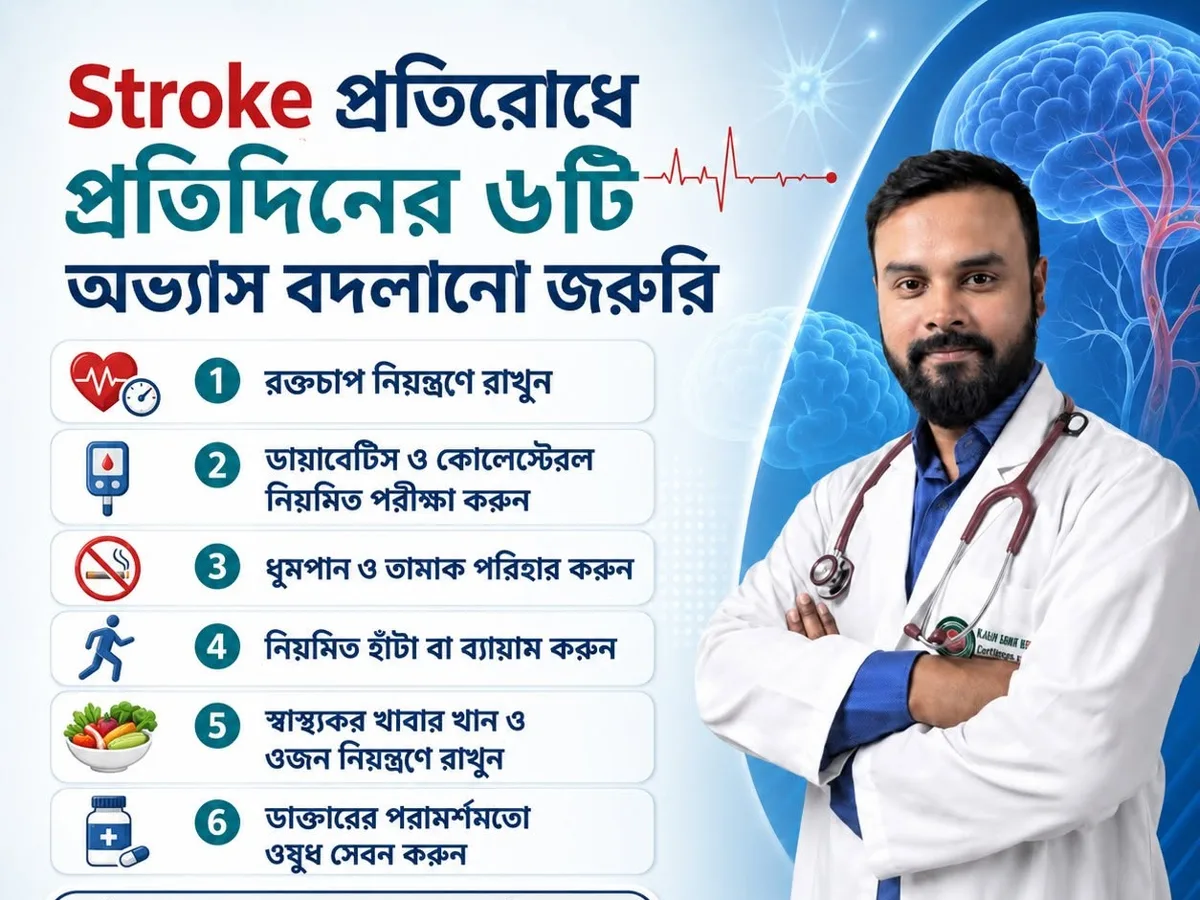
Six Daily Habits That Help Prevent Stroke
Most strokes are preventable. From blood pressure control to daily walking — six everyday habits that lower stroke risk.
Read more — Six Daily Habits That Help Prevent Stroke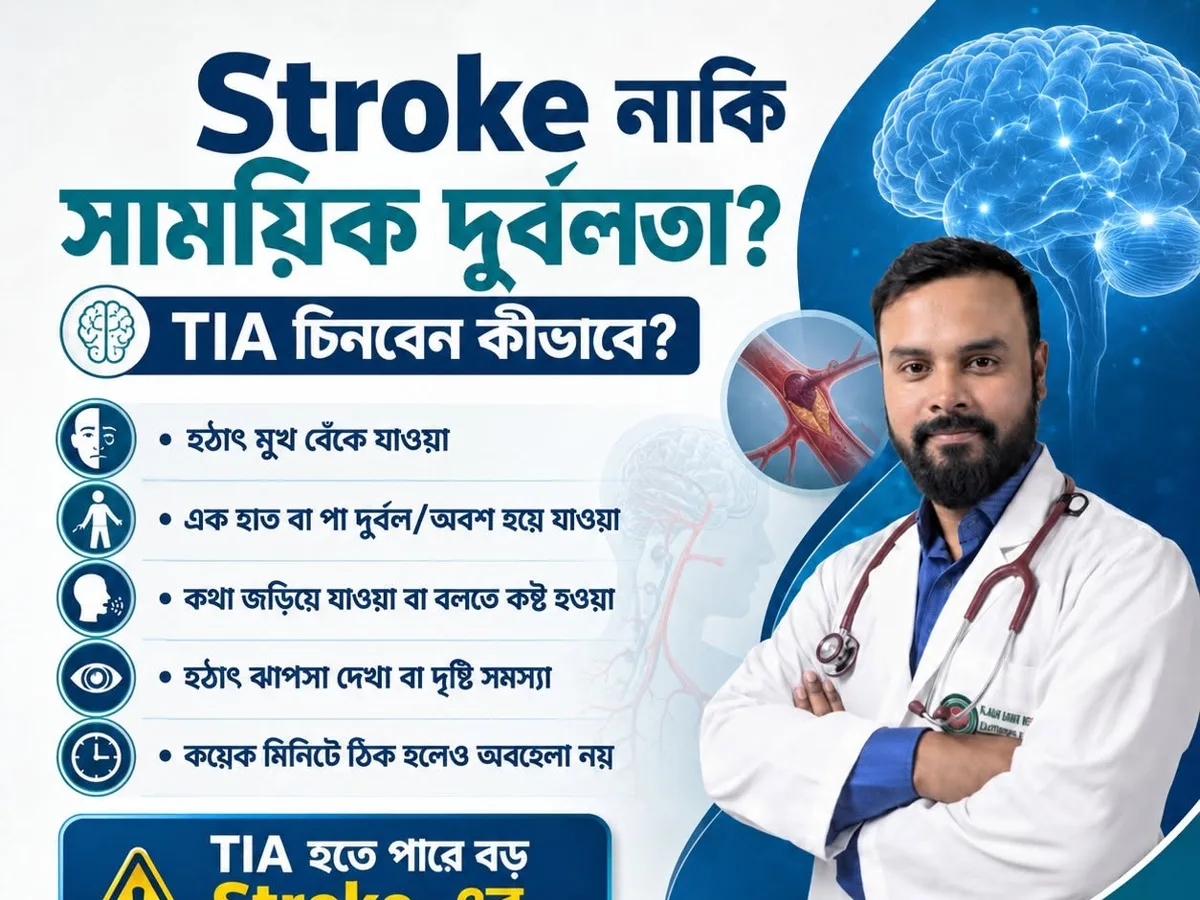
Stroke or a Passing Weakness? How to Recognise a TIA
Face droop or arm weakness that settles in minutes should not be ignored — a TIA can be the early warning of a major stroke.
Read more — Stroke or a Passing Weakness? How to Recognise a TIA