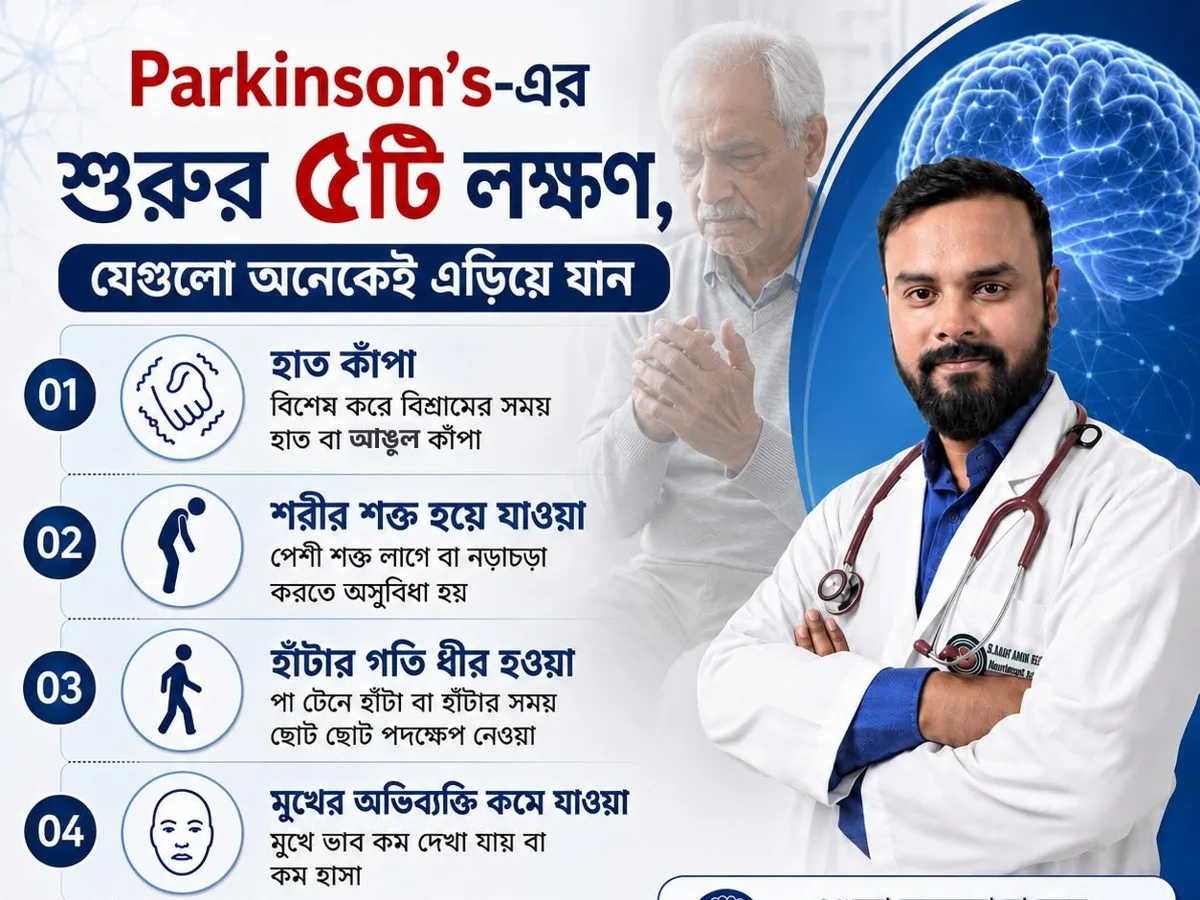
Parkinson's disease begins slowly, so its early signs are often mistaken for normal ageing.
Five early signs
- Tremor — shaking of the hand or fingers, especially at rest
- Stiffness — muscles feel tight, movement is harder
- Slower walking — shuffling or taking small steps
- Less facial expression — a "masked" face, smiling less
- Softer, slower speech — speech becomes unclear or quieter
Smaller handwriting, loss of smell, constipation or acting out dreams during sleep can also be early clues.
What to do
Do not ignore these signs — see a neurologist. With early diagnosis, many people stay active for years with treatment.
Information on this website is for health awareness only and is not a substitute for a consultation. If stroke signs appear (face drooping, arm or leg weakness, slurred speech), do not wait for an appointment — go to the nearest hospital emergency department immediately.

Clinical, Interventional & Stroke Neurologist · Assistant Professor, Neurosciences Hospital, Dhaka
AboutRelated articles
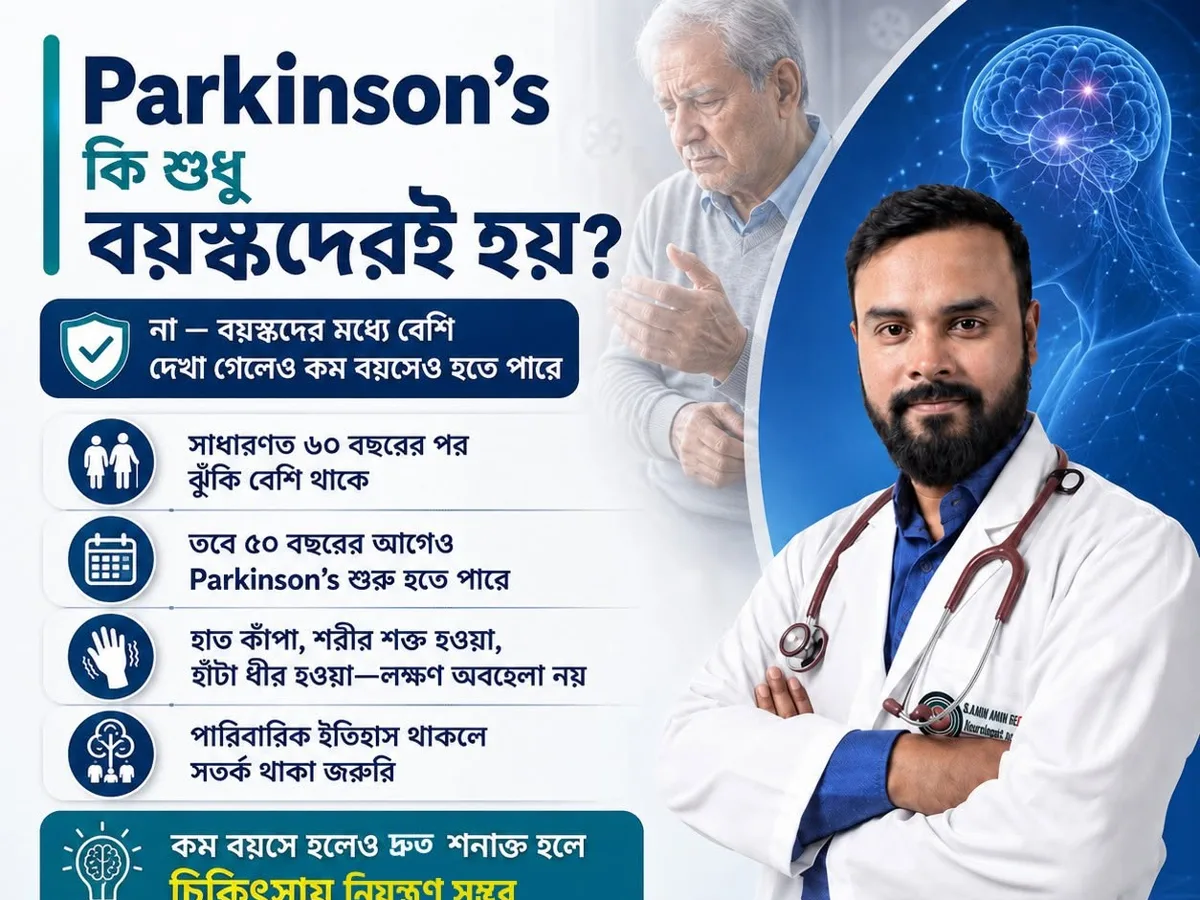
Does Parkinson's Affect Only Older People?
No — although more common in older adults, Parkinson's can start at a younger age. Early diagnosis allows good control.
Read more — Does Parkinson's Affect Only Older People?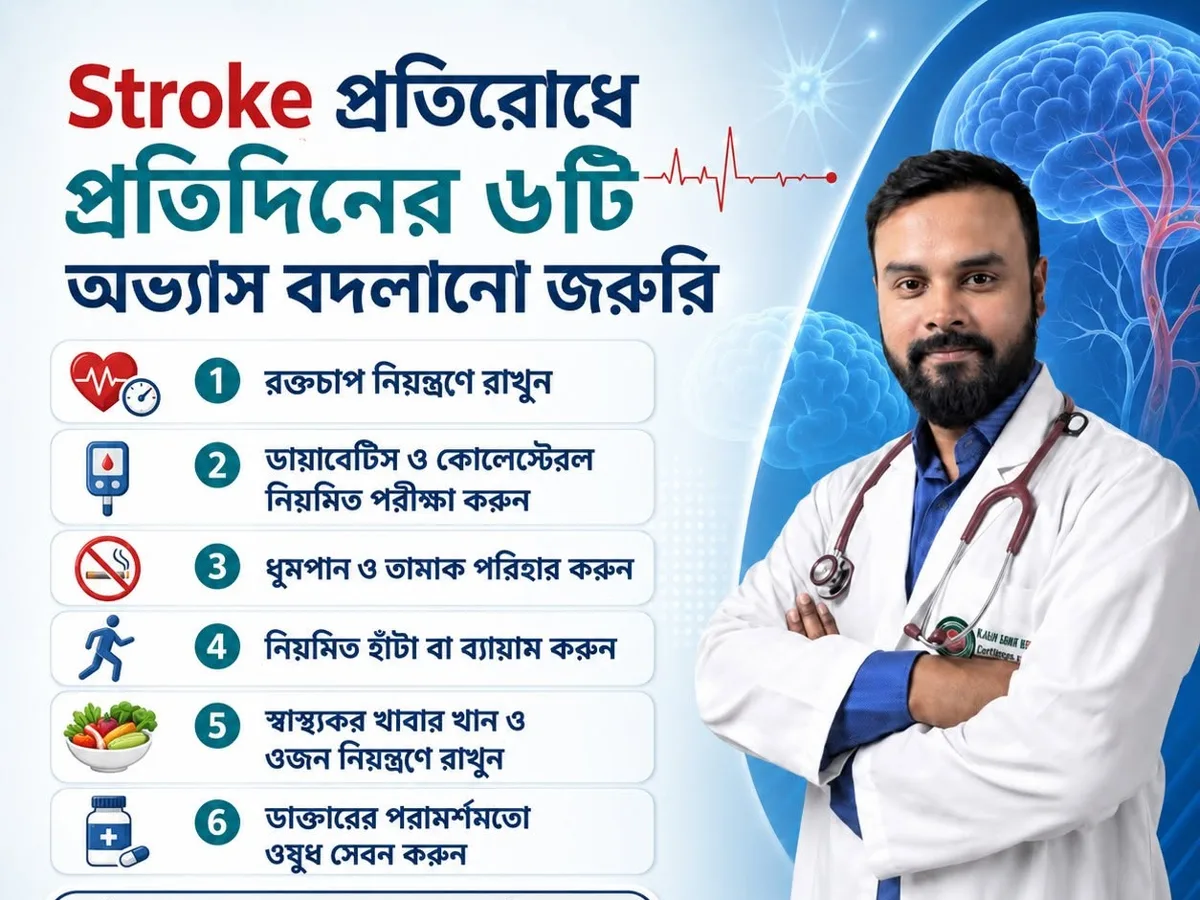
Six Daily Habits That Help Prevent Stroke
Most strokes are preventable. From blood pressure control to daily walking — six everyday habits that lower stroke risk.
Read more — Six Daily Habits That Help Prevent Stroke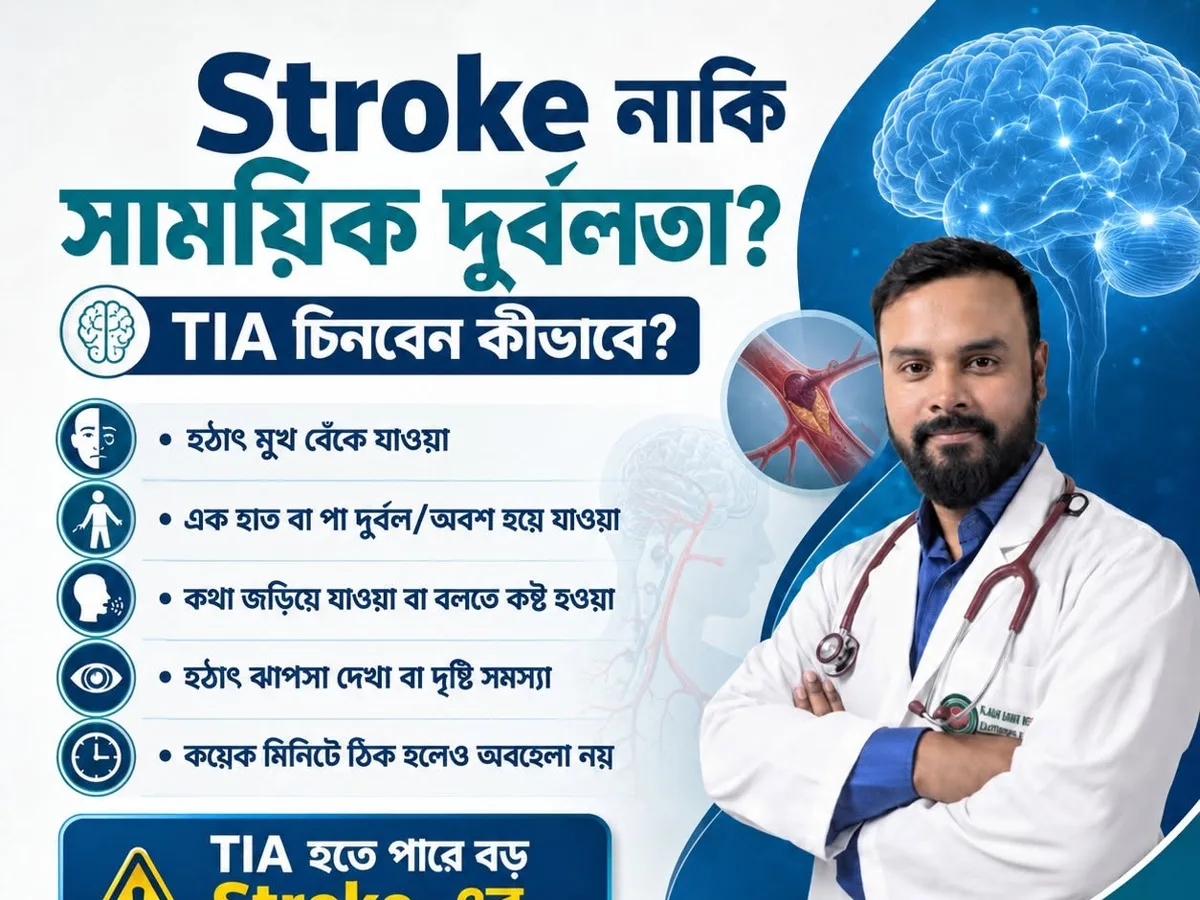
Stroke or a Passing Weakness? How to Recognise a TIA
Face droop or arm weakness that settles in minutes should not be ignored — a TIA can be the early warning of a major stroke.
Read more — Stroke or a Passing Weakness? How to Recognise a TIA