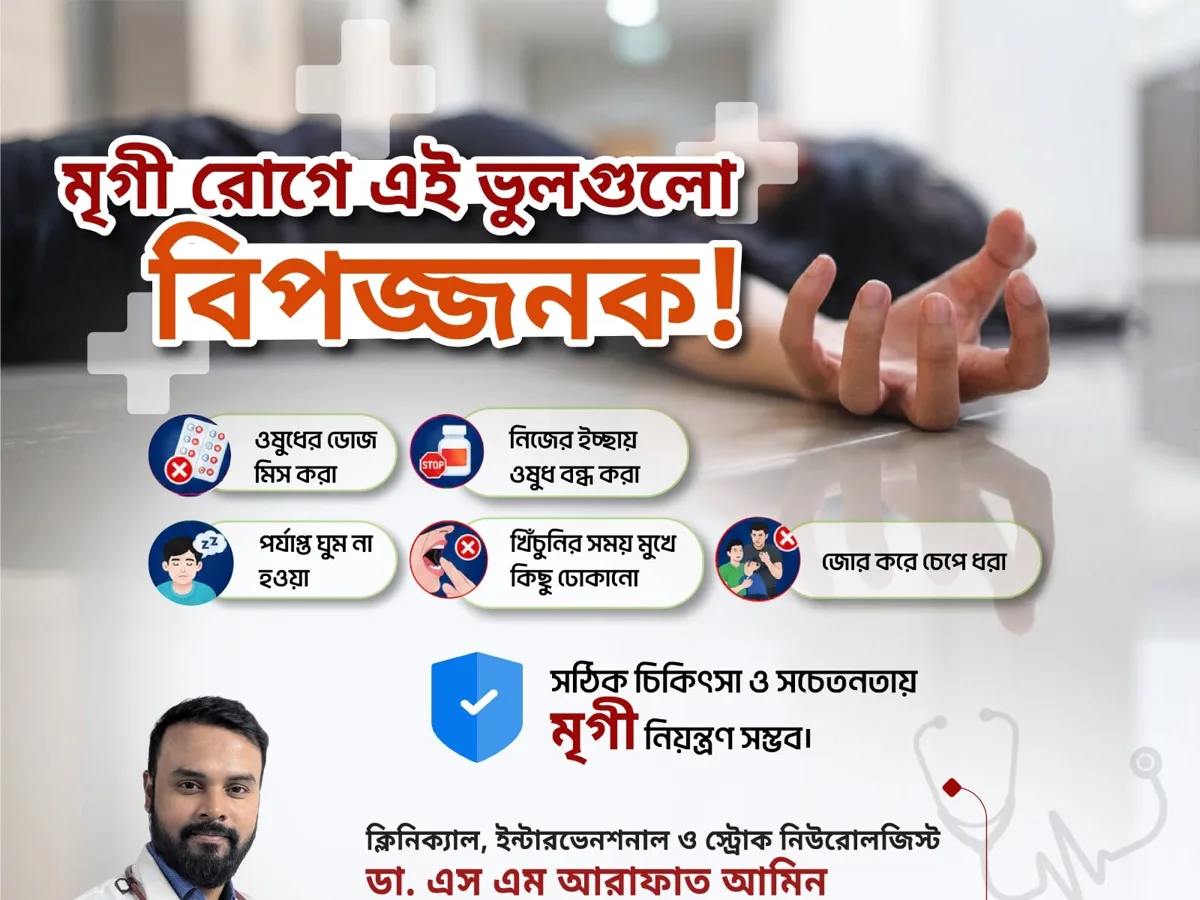
With proper treatment and awareness, epilepsy can be controlled. But some common mistakes trigger seizures or cause harm.
Mistakes to avoid
- Missing doses — take medicine at the same time every day; set a phone reminder
- Stopping medicine on your own — stopping suddenly can cause long, dangerous seizures
- Not getting enough sleep — late nights are a common trigger
- Putting something in the mouth during a seizure — spoons, fingers or cloth can break teeth or block breathing
- Holding the person down — this increases the risk of injury
What to do during a seizure
Stay calm, move sharp or hard objects away, put something soft under the head, turn the person on their side when the jerking stops and note the time. If it lasts more than 5 minutes, or another starts before they wake, go to an emergency department.
Information on this website is for health awareness only and is not a substitute for a consultation. If stroke signs appear (face drooping, arm or leg weakness, slurred speech), do not wait for an appointment — go to the nearest hospital emergency department immediately.

Clinical, Interventional & Stroke Neurologist · Assistant Professor, Neurosciences Hospital, Dhaka
AboutRelated articles
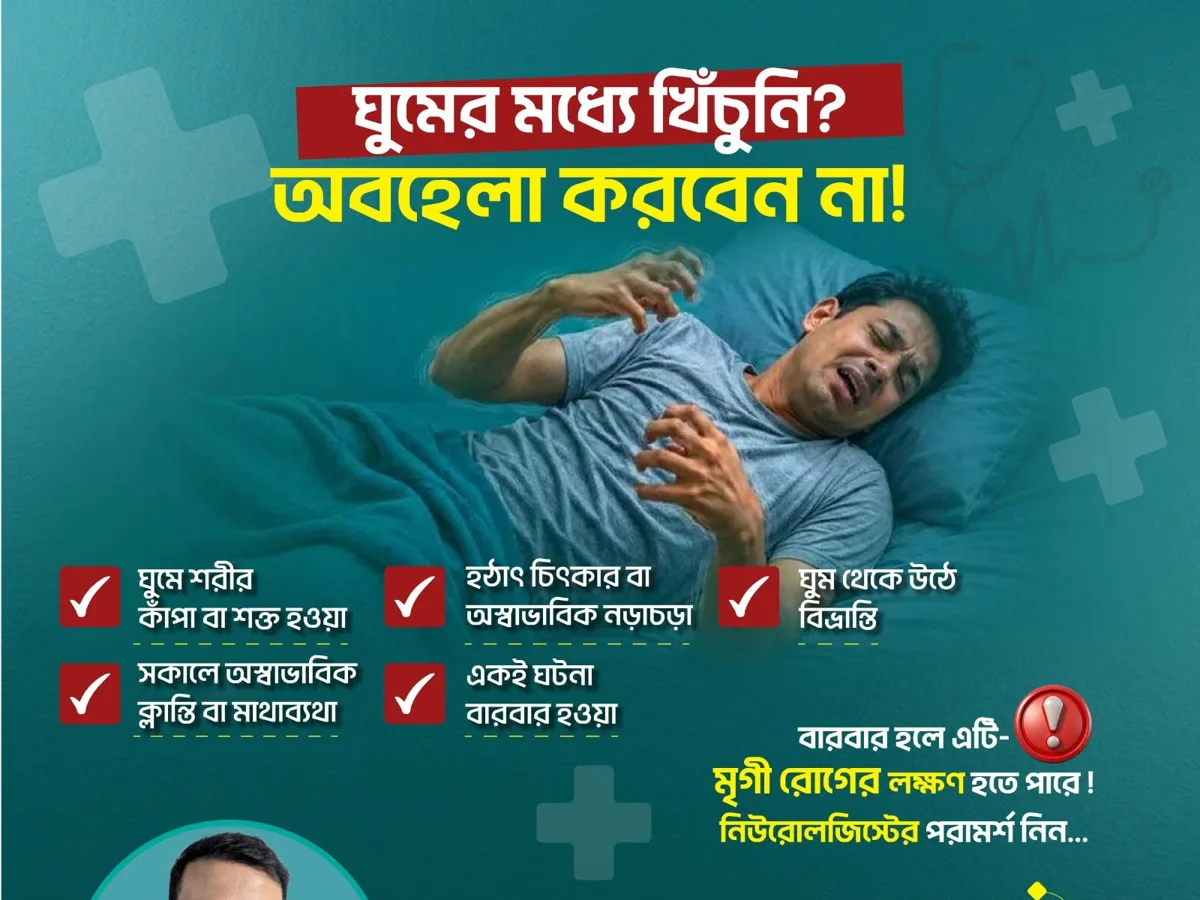
Seizures During Sleep? Don't Ignore Them
Shaking in sleep, sudden screaming, unusual morning tiredness — if repeated, it may be a sign of epilepsy.
Read more — Seizures During Sleep? Don't Ignore Them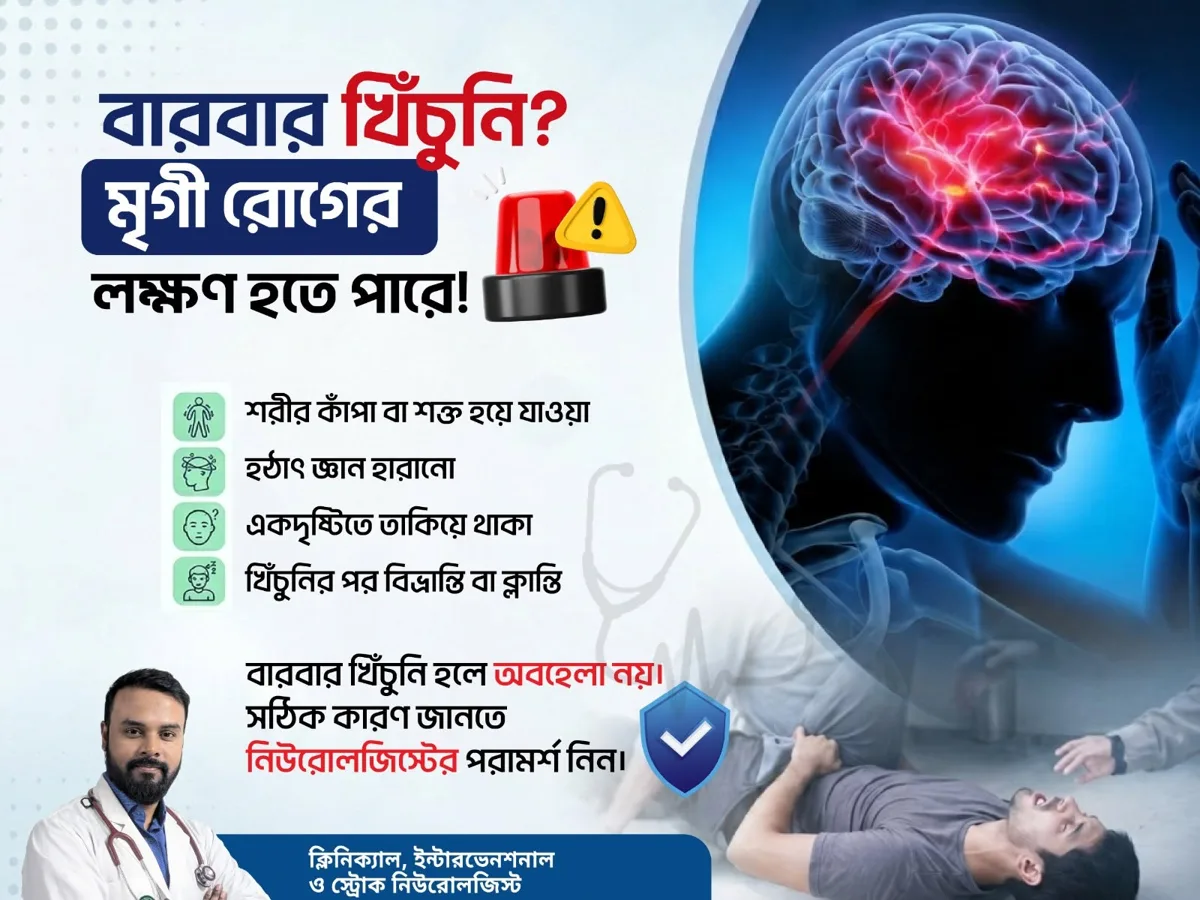
Repeated Seizures? They May Be a Sign of Epilepsy
Shaking or stiffening, sudden blackouts, staring spells — repeated seizures should never be ignored.
Read more — Repeated Seizures? They May Be a Sign of Epilepsy
Six Daily Habits That Help Prevent Stroke
Most strokes are preventable. From blood pressure control to daily walking — six everyday habits that lower stroke risk.
Read more — Six Daily Habits That Help Prevent Stroke